

Real Assets
We build future energy systems and resilient infrastructure, backing emerging opportunities in technology, land and water.

Let’s remind ourselves briefly why impact investors in listed equities have struggled over the past 3-4 years after having been the darling in an “ESG and sustainability stampede” just before that.
As much as the pendulum might have swung a bit too strongly in favour of impact and ESG during the stampede, the current recoil has clearly gone to the opposite extreme which makes us excited about the outlook.
It’s important to recognise that while many sustainability-related stocks have been hit hard in the current apathy towards this topic, the above mentioned extra-ordinary events and outright policy hostility in the US, the issues these companies are addressing are as pressing as ever. Realistically, the 1.5°C target has slipped out of reach and current policies would lead to a catastrophic temperature increase of 3.1°C.1 The world is getting a taster of the consequences ever more frequently with deadly hurricanes Helene and Milton in Florida (Sept’24), flooding of Valencia in Spain (Oct’24), Southern California wildfires (Jan’25), flooding in Emilia-Romagna in Italy (Mar’25), and the collapse of the Birch glacier in Switzerland obliterating an entire village (May’25) to name just a few. The associated annual insurance payouts for natural disasters are on a steadily rising trajectory (5-7% annual rise) well above inflation.2 Munich RE’s annual natural disaster review leaves no doubt what they see as the cause.3
While the Trump administration aims to shoot down the energy transition agenda, many individual US states remain committed to it. It was refreshing to read that a proposed law in the oil state Texas to limit renewable power projects failed to get enough Republican support.4 In fact, 24 US states committed to the Paris Agreement goals in January 2025 after President Trump announced the US’ withdrawal.5 The net-zero commitments in other parts of the world (eg the EU) remain entirely intact.
Sustainable transport is a key enabler of the energy transition. And while there is a lot of noise around Tesla’s electric vehicle (EV) shipments declining strongly in Europe, the underlying EV market has actually started to grow again.6
Similarly, there is a lot of concern regarding renewable energy investments in the US on the back of the house-approved reconciliation bill. And quite rightly. But, as we argue further below, while rescinding parts of the Inflation Reduction Act (IRA) will inevitably be a set-back, there is now meaningful resistance to the anti-renewables narrative in the Republican party at state as well as federal level. Secondly, state-level subsidies/tax incentives are unaffected by the bill and the commitment of many large US companies to switch to clean energy remains unchanged. Only pockets (eg US airlines) have used Trump’s negative stance to back away from their own commitments.
Lastly, we shouldn’t forget that our strategy also has a strong commitment to social sustainability themes with health care by far the largest. Here again, President Trump created shock waves in the appointment of RF Kennedy Jr. as the US Health and Human Services chief and his verbal push for a “most favoured nation” (MFN) approach to drug pricing on 12 May 2025. This approach would potentially upend the current system of drug discovery. The executive order which followed confirmed that there is no realistic plan for immediate implementation of the order, which calmed nerves.7 The reality is that these changes will be extremely difficult to implement.
Let’s put some meat on the bone and illustrate how these challenges have impacted the valuation of our portfolio and investment universe. Put simply, valuations have rarely been lower.
This is illustrated below for the portfolio using for example the price book ratio, or multiple, relative to local markets. The price to book ratio is the ratio of the stockmarket value of a company, to the company’s book value (ie total net assets on the balance sheet). We then express this as a percentage of the equivalent ratio for the whole of the stock’s local stockmarket.
So, for example, if a US stock as a price to book multiple of 3x, and the market average is 2x, this measure would be 150%. As investor confidence in a stock increases, so its multiple will expand, and if confidence in the rest of the market doesn’t increase by the same amount, so that premium will increase, or any discount decrease.
In the chart below, we have tracked this measure for the whole portfolio over a ten year period, having rebased it to 100 at the start of the period. The data is clear: the market’s confidence in our portfolio, and the sustainability themes it represents, grew and grew until 2020…. But since then, has fallen continually, and is now testing new lows. Other valuation metrics show a similar trend.
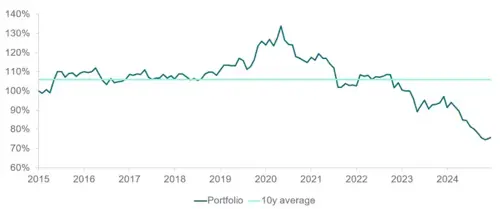
Figure 1: Portfolio price-to-forward-book ratio, relative to local markets, rebased8
The cynic might wonder whether this could be due to the WHEB strategy investing increasingly in lower quality names which derated more strongly as a result of those weak fundamentals. This has not been the case – the portfolio fundamentals have remained consistently strong and healthy and in fact mostly ahead of the MSCI World in the latest reported year of 2024.
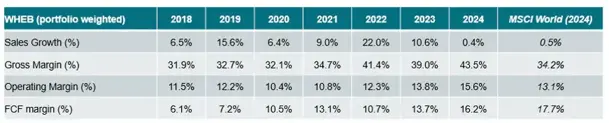
Figure 2: Portfolio fundamentals - Underlying strength9
And the observation of a severe derating of valuation is not portfolio-specific but extends to a number of themes within our investment universe as shown below. For example, relative to its five-year history, the solar sector’s price-to-earnings ratio has halved. The “Electric Vehicles” (EV) sub-theme is not far off that level and neither is “Emission Reductions”. This creates opportunities - we continue to be convinced that the future of electricity generation is renewable, the future of transport is electric, and the transition to a low-carbon economy is imperative to secure a liveable planet.
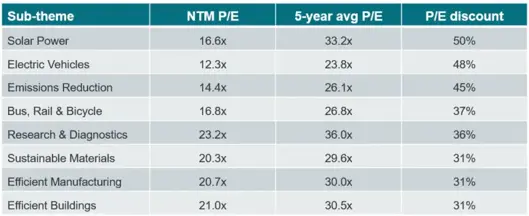
Figure 3: Value opportunities in the universe10
It might be worth going through a few stock examples where we see a large dislocation between the current price and our target price. The common denominator is that while the company is currently experiencing a challenging situation we see this as temporary and expect the valuation gap to narrow over time.
The valuations of impact-related stocks have rarely been cheaper driven down by extra-ordinary one-off events and a populist political agenda in some key markets. As painful as the past few years have been, we are super excited about the growth and performance prospects across our portfolio and the investment universe13.
We are not alone in recognising the urgency of taking actions to drive forward sustainability and abate climate change – it has never been greater. Many countries, US States and individual companies remain committed to the environmental agenda despite past and present obstacles. With that backdrop, if the market doesn’t think these companies have a bright future, it’s a great opportunity. Let’s go hunting…
Ben Kluftinger
Senior Manager, Investments
Foresight Capital Management


You have viewed 0 of 0
Foresight Group LLP does not offer legal, tax, financial or investment advice and the information on this website should not be construed as such. We recommend investors seek advice from a regulated financial adviser. The opportunity described in this document may not be suitable for all investors. Any such investment decision should be made only on the basis of the Fund scheme documents and appropriate professional advice.
Foresight Group LLP acts as investment manager and is authorised and regulated by the Financial Conduct Authority with Firm Reference Number 198020 and has its registered office at The Shard, 32 London Bridge Street, London SE1 9SG.
OEICs
An investment in FP Sustainable Future Themes Fund, FP Foresight Global Real Infrastructure Fund, FP Sustainable Real Estate Securities Fund, FP UK Infrastructure Income Fund or FP WHEB Sustainability Impact Fund and Liontrust Diversified Real Assets Fund (together the “Funds”) should be considered a long-term investment that may be higher risk. Portfolio holdings are subject to change without notice.
The Authorised Corporate Directors FundRock Partners Limited (registered office at Hamilton Centre, Rodney Way, Chelmsford, England, CM1 3BY) and Liontrust Investment Partners LLP (registered office 2 Savoy Court, London WC2R 0EZ), are authorised and regulated by the Financial Conduct Authority with Firm Reference Numbers 469278 and 518552 respectively. The Funds are incorporated in England and Wales.
ICAVs
An investment in the WHEB Sustainable Impact Fund and the WHEB Environmental Impact Fund (together the “Funds”) should be considered a longer-term investment that may be higher risk. Portfolio holdings are subject to change without notice.
The Manager of the Funds is FundRock Management Company S.A., authorised and regulated by the Luxembourg regulator to act as UCITS management company and has its registered office at Airport Center Building, 5, Heienhaff, L-1736 Senningerberg, Luxembourg.
We respect your privacy and are committed to protecting your personal data. If you would like to find out more about the measures, we take in processing your personal information, please refer to our privacy policy, which can be found at http://www.foresight.group/privacy-policy.


